

Medicine Prepositioned Around the Caribbean for Direct Relief's Hurricane Melissa Response
Covering Crisis is Direct Relief’s newsletter for journalists covering public health crises
Also in this edition:
Jennifer Lotito Joins Direct Relief as Chief External Affairs Officer
After Deadly Mexico Floods, a Medical Brigade Provides Care
In Afghanistan’s Earthquake-Shattered Villages, A Doctor Treats Wounds and Infections, Hears Stories of Loss
Direct Relief Commits $250,000, Opens Medical Inventory in Response to Hurricane Melissa
October 27, 2025
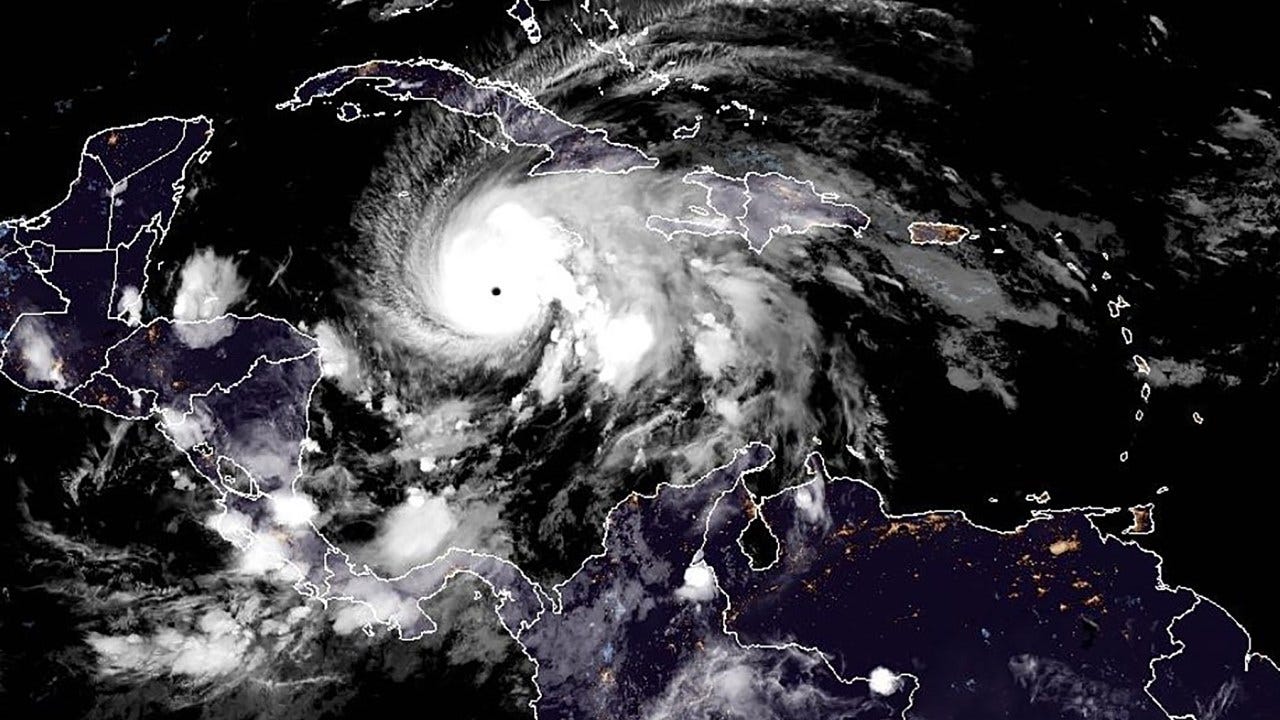
Direct Relief today committed an initial $250,000 in financial support and offered up its entire medical inventory to health providers in the Caribbean in response to Hurricane Melissa.
Direct Relief has prepositioned emergency medical supplies across the Caribbean and is dispatching new aid to the threatened islands. Two hurricane preparedness packs (HPPs), each with enough medications to treat 3,000 people for one month, are staged with the Pan American Health Organization (PAHO) in Panama and ready to deploy to Jamaica or other hard-hit island nations as needed, with two more HPPs staged in Haiti and two in the Dominican Republic.
Additional emergency medical supplies are being delivered to the region today and in the coming days, including Direct Relief emergency medical backpacks pre-positioned with PAHO in Panama. Direct Relief is assembling another large shipment at its medical warehouse in Santa Barbara, Calif., ready to airlift as soon as the Kingston, Jamaica airport reopens. That shipment includes 100 field medic packs filled with first aid items for triage care, at the request of Jamaica’s National Health Fund, and 250 requested personal care kits that include hygiene items for displaced people.
Direct Relief has provided extensive medical and healthcare resilience aid to the Jamaican healthcare system. This includes:
Over 75 tons of medical aid delivered since 2020
24 backup generators to power health centers in Jamaica when grid power is down
$1.8 million to provide solar backup power for medical warehouses
A primary healthcare mobile unit
Recent shipments of insulin and Survanta, which treats respiratory distress in newborn infants
“Situations like these are why we commit funding towards preparedness programs, since backup power availability to health centers can be life-saving in an emergency,” said Dan Hovey, Direct Relief’s VP of Emergency Response.
As seen in other major hurricanes in the Caribbean, Hurricane Melissa could cause widespread power outages lasting weeks to months, and extensive infrastructure damage to roads and ports, leaving communities cut off for extended periods of time. If the storm continues moving slowly on its current track, “you will see major disruptions to healthcare access and the medical supply chain,” Hovey said.
While continuing its decades-long practice of prepositioning donated medicines ahead of hurricanes and delivering urgently needed medical supplies after disasters, Direct Relief is intensifying efforts to make vulnerable communities more resilient. This includes addressing the broad, long-term effects of disasters, such as disrupted access to healthcare, prolonged displacement, and mental health crises, and committing to recoveries that can span years, long after global attention has faded.
Read More About Direct Relief’s Expanded Disaster Response Strategy
Jennifer Lotito Joins Direct Relief as Chief External Affairs Officer
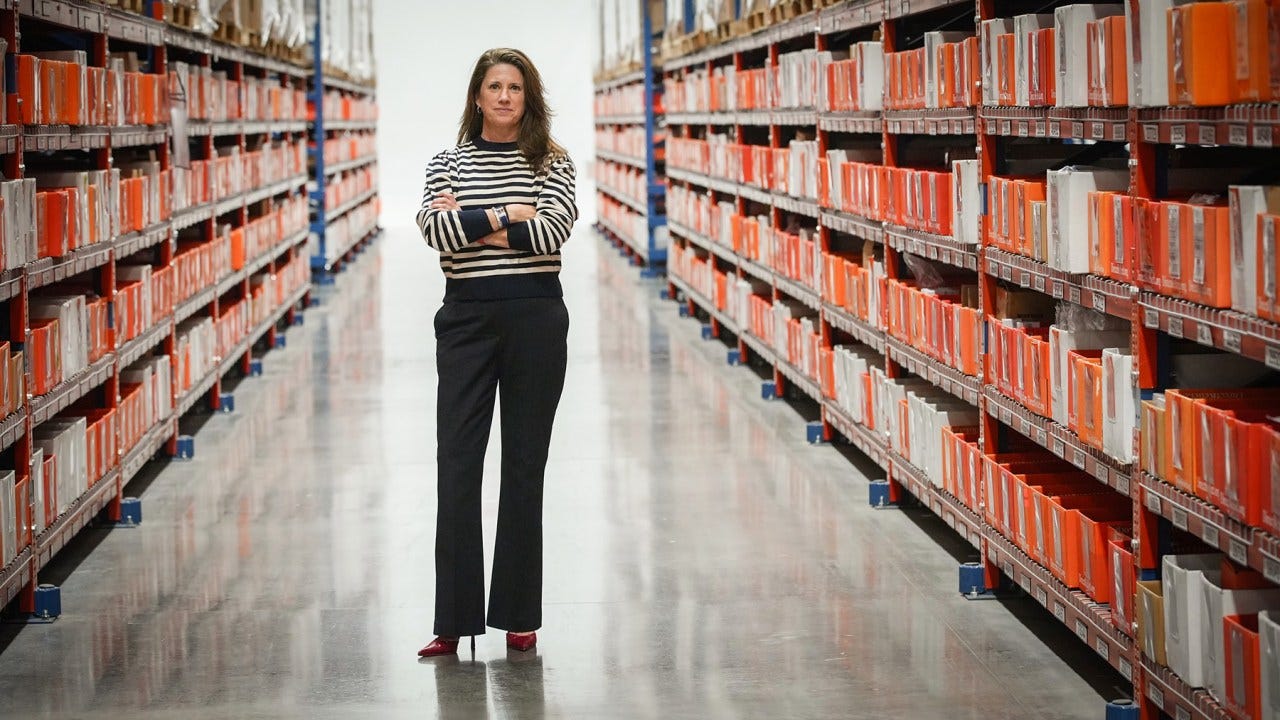
Direct Relief today announced that Jennifer Lotito has joined its executive leadership team as Chief External Affairs Officer, overseeing global communications, fundraising, partnerships, brand, and creative. The move bolsters Direct Relief’s plans to grow, innovate, and deliver more impact where it is needed most, building on the $2 billion in medical aid distributed annually across 90 countries and all 50 U.S states.
Amy Weaver, Chief Executive Officer of Direct Relief, said, “I couldn’t be more thrilled for Jennifer to join the team at Direct Relief. She is a dynamic, visionary leader with unrivalled experience mobilizing people, partners, and organizations to drive change. Her unique ability to meld strategy and creativity with rapid execution will be a huge boost to our organization as we seek to meet the rising need for medical aid amid growing conflict, climate impacts, and public health emergencies.”
This appointment marks the first major leadership addition by Amy Weaver since assuming the role of President and Chief Executive Officer earlier this year. Previously, Lotito served as President and Chief Operating Officer at (RED), the organization founded by Bono and Bobby Shriver to fight AIDS and the injustices that enable pandemics to thrive.
Prior to becoming (RED) President and COO in 2020, Jennifer led the organization’s partnerships team for 11 years, playing a pivotal role in fostering innovative partnerships with companies including Apple, Bank of America, FIAT, Jeep, RAM, and Salesforce, as well as Snapdragon and Manchester United, among others.
She went on to lead the organization’s growth in developing a portfolio of life science partners, including Roche, Merck, and ViiV, while heralding new collaborations in the fashion space, ranging from Louis Vuitton to La DoubleJ. Today, (RED) and its partners have delivered more than $800M to the Global Fund. Jennifer has traveled extensively in Africa, leading delegations that have included CEOs, media, and celebrities.
Speaking on her appointment, Lotito said, “It’s hugely exciting to be joining an organization as well respected and impactful as Direct Relief. I’ve known Amy for many years, and the opportunity to work together on such an exciting, game-changing endeavor to impact millions of people is thrilling. After nearly two wonderful decades with (RED), it’s the perfect time to take on new challenges and help Direct Relief expand its reach.”
Before joining (RED), Lotito was a Senior Partner at Ogilvy Worldwide, leading international accounts for IBM and American Express. A graduate of the University of Massachusetts Amherst, she began her career in advertising in Boston.
Lotito is also Co-Founder and President of the JML Hope Foundation, which focuses on mentorship for emerging leaders. She serves on the Goals House Advisory Board, the National and Tri-State Advisory Boards of Defy Ventures, and the Board of Oido, and is a Forbes.com contributor on leadership, global health, and corporate responsibility.
Founded in 1948 and headquartered in Santa Barbara, California, Direct Relief provides large-scale medical assistance to improve the health and lives of people affected by poverty, disaster, and conflict. Recognized by Forbes as one of the Top Five Largest Charities in America, honored with the 2025 Seoul Peace Prize, and recipient of 15 consecutive four-star ratings from Charity Navigator, Direct Relief is known for its logistics-driven humanitarian operations and longstanding commitment to transparency and trust.
After Deadly Mexico Floods, a Medical Brigade Provides Care
By Talya Meyers
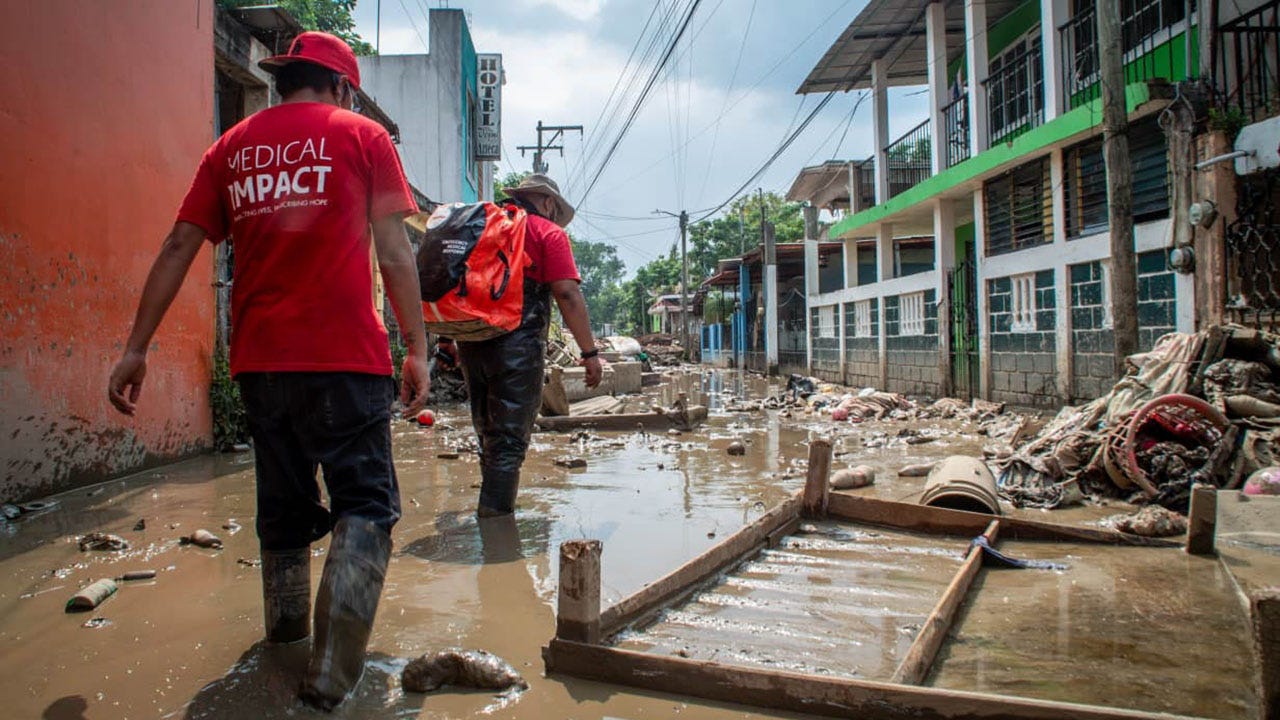
The brigade arrived in Álamo, Veracruz on Friday, October 17, just days after heavy rainfall pummeled this area of Mexico.
There, the team – six doctors, four nurses, and a psychologist, among others – found people with nowhere to live after their houses had been flooded up to the second story. Patients with diabetes, hypertension, asthma, and HIV who’d lost their medication. Open wounds on the hands and feet of people working to clean up communities damaged by some of the heaviest rainfall Mexico has seen in years.
“The situation is not good,” said Gabriel Sánchez, the team leader and a coordinator of medical operations at Medical Impact, an organization that deploys brigades of healthcare providers to communities in Mexico and around the world. “Many families were left homeless, their belongings were lost.”
At least 76 people were killed last week when unexpected, heavy rainstorms caused flash flooding and landslides in the Mexican states of Hidalgo, Querétaro, Puebla, San Luis Potosí, and Veracruz. Hurricane Priscilla, which passed over much of this area earlier in October, brought heavy rainfall, but much less damage.
That’s part of the problem, said Dr. Giorgio Franyuti, Medical Impact’s executive director. “Usually…we are very adaptive toward activating protocols against hurricanes,” he said of Mexico’s extensive public and nonprofit emergency response systems. “We had this with Hurricane John, Otis, and Erick [in June of] this year.”
But rains that aren’t part of tropical storm systems are rarely so destructive, Dr. Franyuti said.
“The devastation is massive,” he said. “It will take a very long time for health systems to achieve a reconstruction of their infrastructure.” He said the heavily damaged areas cover more ground than the whole of Central America.
Medical Impact deploys brigades all over the world – Dr. Franyuti has provided medical care in Guatemala, Gaza, and Colombia, among other places – both in emergencies and to temporarily boost healthcare in overwhelmed or under-resourced settings. When Dr. Franyuti spoke to Direct Relief on Wednesday, he turned his phone camera on to show brigade members packing pharmaceutical supplies and field medic packs the organization had donated.
Direct Relief funded Medical Impact’s flooding response brigades with a $25,000 grant. The organization also supplied essential medicines and medical supplies, as well as 10 field medic packs earlier this year, in advance of hurricane season, to enable swift in-the-field deployments like this one. (The organization also provided medical support to Mexico’s Secretariat of National Defense, or SEDENA, and the Guerrero Ministry of Health’s Urgent Care Unit, which mobilized responders to the area.)
The grant “enables us to jump-start the response so we can start right away,” Dr. Franyuti said. Staff members were packing portable mattresses and potable water along with the medicines and supplies. “We do not know where we’re going to stay, but we have to deploy anyway. It is so time-sensitive, and so critical. We usually resolve [logistical issues like shelter] on the spot.”
In Afghanistan’s Earthquake-Shattered Villages, A Doctor Treats Wounds and Infections, Hears Stories of Loss
By Talya Meyers
When Dr. Obaidurahman Yousafi remembers the aftermath, he remembers the shrouds.
On August 31, a magnitude 6.0 earthquake struck eastern Afghanistan, killing more than 2,200 people, destroying whole villages, and displacing tens of thousands. A few days later, Dr. Yousafi arrived with a team of medical workers in Anderlechak, a village in the Sawkai District of hard-hit Kunar Province, and saw piles of material in front of the small local mosque. A resident explained that villagers had had to hurriedly find shrouds for approximately 85 people killed by the quake.
“I felt fear” seeing the piles of shrouds,” he explained in English. “This was a very dazzling story and memory for me.”
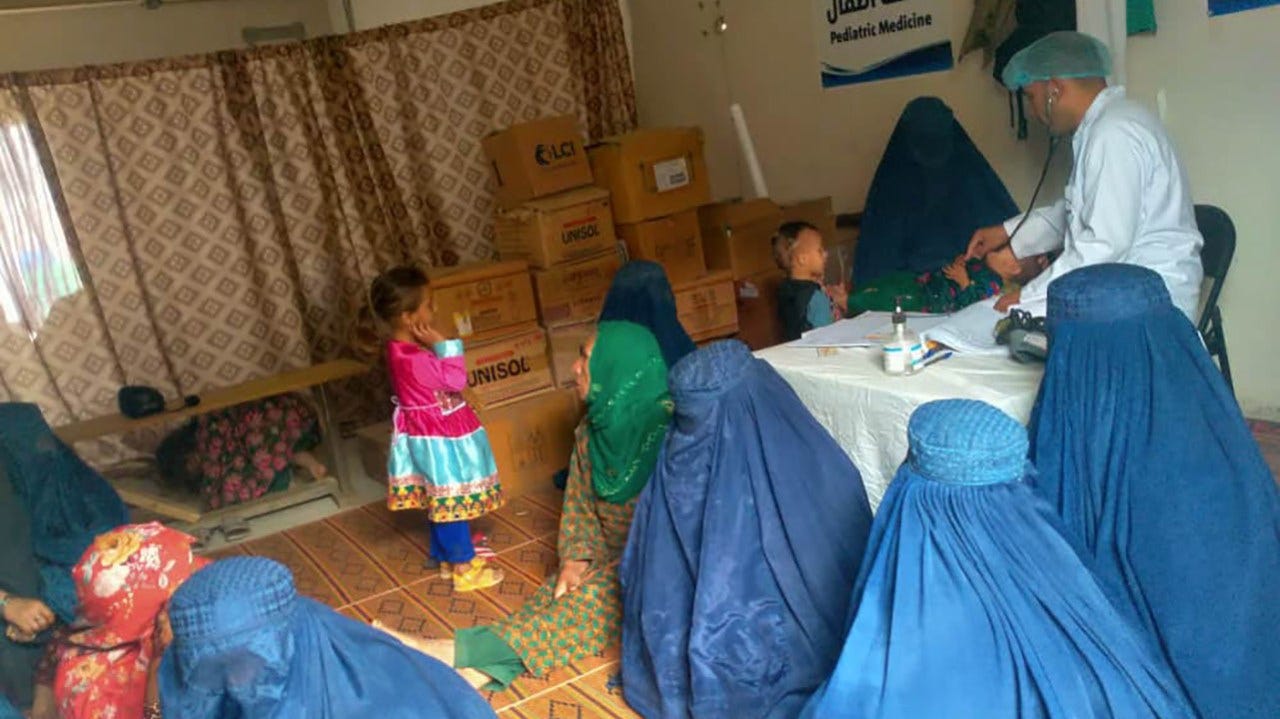
Dr. Yousafi is a physician with the Afghanistan Islamic Medical Association, a nonprofit group. Since September 5, AIMA workers have been providing medical care to Afghan people in earthquake-affected villages: treating injuries and infections, caring for pregnant and lactating women, and providing medicine to patients with chronic diseases.
Speaking to Direct Relief both in English and with the aid of a translator, he described scenes of urgent need and harrowing loss.
AIMA’s group of providers split up: One team quickly established a stationary clinic, which Dr. Yousafi heads, in the Osmane displacement camp in Khas Kunar District, while a mobile team travels to hard-to-reach villages in the mountainous area using an off-roading vehicle.
AIMA’s earthquake response teams were equipped by a 17-pallet emergency shipment from Direct Relief. The shipment contained about 8,300 pounds of antibiotics, prenatal vitamins, oral rehydration salts, water purification tablets, prenatal vitamins, inhalers, medications, insulin, and other supplies for chronic disease management – about $6 million in wholesale value.
The supplies were received and distributed by the Afghanistan AMOR Health Organization (AAHO), a long-term Direct Relief partner and one of the few NGOs in the country that can receive international humanitarian support. Over the past 12 months, Direct Relief has provided $460,000 in material medical aid to Afshar Hospital, which AAHO operates in Kabul.
Earthquakes happen frequently in Afghanistan. Even at relatively moderate magnitudes, they are a serious threat to the country’s rural provinces, where buildings are often informally constructed from easily available materials and highly vulnerable to collapse. Because this earthquake occurred when people were sleeping at home, the death toll was particularly high, and women and children were especially affected, witnesses have reported.
Mountainous terrain and damaged roads can cut vulnerable communities off from rescue and aid, as this quake did. And even without the added impact of natural disasters, the Afghan people experience high levels of poverty, hunger, and malnutrition. The United Nations estimates that more than 23 million individuals – over half the country’s population – urgently need humanitarian assistance.
Adding to the humanitarian need, over 2.2 million Afghans have returned to the country from Pakistan and Iran this year – often involuntarily. Thousands of returnees from Pakistan currently live in earthquake-devastated areas.
Asked about reports that many women have been unable to access medical care after the earthquake, Dr. Yousafi said it was “a true story.” To ensure that women in displacement camps and affected villages could receive primary and maternal healthcare, AIMA’s medical team included several female members: two physicians, a midwife, and a nurse.